Human Experience And Perception
This Gallery, Human Experience and Perception, explores how artists represent emotion, movement, and everyday life through different styles and time periods. The selected works highlight how perception is shaped by light, color, and composition, from quiet moments of isolation to vibrant expressions of energy and connection. Together, these pieces show how art can capture both personal and shared human experiences, revealing how individuals interact with their environment and each other. Each artwork reflects a unique perspective, yet all connect through their focus on emotion, atmosphere, and the way we see the world. Take a look!
Artworks
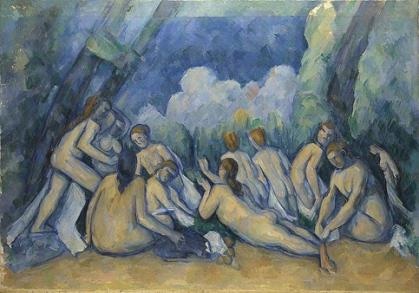
- The Large Bathers (1875) — Artist: Paul Cezanne Artist Cezanne presents a group of nude figures gathered within a natural landscape in The Large Bathers, arranged in a carefully structured yet seemingly relaxed composition. The figures sit, recline, and interact beneath arching trees, forming a triangular arrangement that guides the viewer's eye across the scene. The muted blues, greens, and earthy tones blend the human forms with the surrounding environment, reducing the distinction between nature and the body. Rather than focusing on anatomical position precision, cezanne simplifies the figures into solid, almost sculptural shapes. The paint reflects Cezanne's interest in structure and form, as the bodies appear constructed from geometric elements rather than fluid, naturalistic movement. The figures are not individualized, instead they function as part of a unified composition, emphasizing balance and harmony over personal identity. The background and foreground merge through consistent brushwork, creating a flattened space that can challenge traditional depth and perspective. The artist invites viewers to consider how perception can be shaped by structure rather than detail, suggesting that the essence of human presence can be converted through balance, repetition, and abstraction rather than a direct representation.
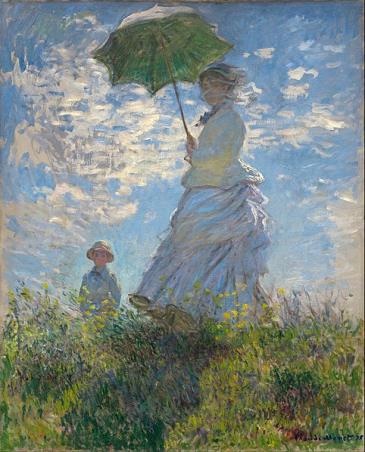
- Woman with a Parasol (1875) — Artist: Claude Monet This dime captures a fleeting outdoor moment in Woman with a parasol - Madame Monet and Her Son, depicting a woman standing on a grassy hill while holding a green parasol above her. A child lingers slightly behind her, partially obscured by the tall grass, The figures are viewed from a low angle, making them appear elevated against a bright sky filled with soft, drifting clouds. Loose brushstrokes and light, airy colors emphasize movement, as the woman's dress and the surrounding grass seem to ripple in the wind. Rather than centering in on precise detail, Moment prioritizes the effects of light and atmosphere. The figures are somewhat indistinct, blending into their surrounding, which reflects the Impressionist interest in capturing a moment as it is perceived rather than perfectly defined. The sunlight filters across the scene, creating shifting tones of blue, green, and white that give the painting a sense of transience and immediacy. Overall, this piece challenges many aspects by presenting the subject not as a fixed, detailed individual, but as part of a larger environmental experience. The identity of the woman is less important than the sensation of the moment itself.
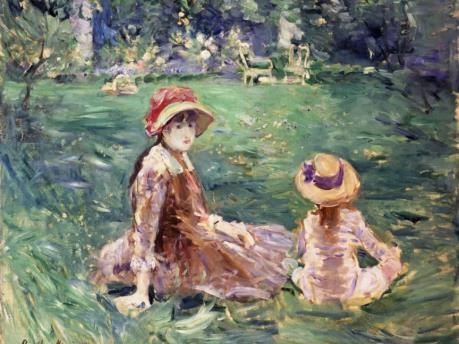
- Two Girls on a Lawn (1890) — Artist: Pierre-Auguste Renoir This piece of work presents a serene outdoor scene in Two Girls on a Lawn, where two young figures sit in a sunlit garden surrounded by soft greenery. One girl faces the viewer with a calm, slightly curious expression, while the other turns away, her attention directed elsewhere. Their dresses blend into the environment through loos, fluid brushstrokes, creating a sense of unity between the figures and nature. Light filters across the grass and their clothing, emphasizing fleeting moments rather than sharp detail. Renior's work reflects Impressionist interests in capturing everyday life and the effects of light and atmosphere. The scene appears casual and unposed, yet carefully composed, inviting the viewer into a quiet moment of leisure. The softness of the forms and the vibrant yet balance colors create a dreamlike quality, where perception feels more important than precision. The figures are not defined by strict outlines but instead emerge from the surrounding landscape. This painting overall, challenges traditional portraiture by focusing less of individual identity and more on mood and shared experiences. While the girls are present, they are not individualized in detail, suggesting that the moment itself holds greater significance and meaning than who they are. The artist essentially invites the viewers to consider how memory and perception shape what we see, emphasizing that human experience is often defined by atmosphere, emotion, and fleeting impressions rather than exact representation.
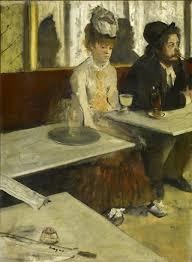
- L'Absinthe (1876) — Artist: Edgar Degas Edgar Degas presents a quiet yet emotionally charged scene in L'Absinthe, depicting two figures seated side by side in a cafe. A woman sits slouched with a distant, almost vacant expression, whilst the man behind her looks away, detached and absorbed in his own thoughts. A glass of absinthe rests in front of the woman, acting as both a physical object and a symbolic presence. The muted, earthy tones and off-center composition create a sense of imbalance, reinforcing the emotional disconnect between the figures and their surroundings. Rather than simply portraying a lively social setting, Degas captures a moment of stillness and isolation with a public space. The figures are physically close, yet psychologically distant, emphasizing themes of loneliness and alienation in modern urban life. The cropping of the scene and the empty space in the foreground further separate the viewer from the subjects, as if observing from afar without truly connecting. The painting challenges traditional ideas like social interaction by presenting a cafe not as a place of connection, but of quiet detachment. The woman's withdrawn posture and unfocused gaze suggest emotional exhaustion or escapism, while the presence of absinthe hints at coping mechanisms within city life. Degas ultimately invites viewers to question how proximity does not always equal connection, and how modern environments can intensify feelings of isolation despite shared space.
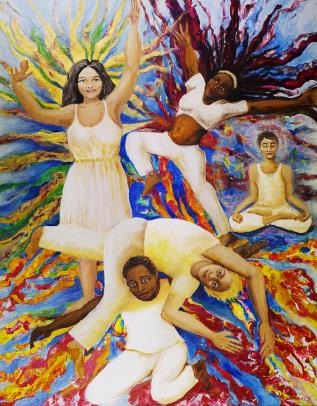
- The Dance of Ecstasy (2021) — Artist: Sylvia Brallier This painting presents a dynamic composition of human figures intertwined in expressive, almost weightless poses against a vibrant, multicolored background. Each figure stretches, bends, or balances in a way that emphasizes movement and connection, while the swirling bursts of color radiate outward like energy or emotion made visible. The strong use of bright blues, reds, yellows, and greens creates an intense visual rhythm, blurring the boundary between the figures and their environment. Rather than existing in a defined space, the bodies appear suspended within a shared emotional or spiritual atmosphere. The figures are stylized and simplified, focusing less of precise anatomy and more on gesture and expression. Some appear to be dancing, others resting or meditating, suggesting a range of human experiences from energy to calm. Their physical closeness and overlapping forms create a sense of unity, while their individual poses maintain a sense of personal identity within the group. Additionally, this piece challenges traditional representation by prioritizing emotion and collective experience over realism. The figures are recognizable as human, yet their exaggerated movement and integration with the background suggest something beyond ordinary perception. The artist's painting invites the viewers to consider how identity can be expressed through motion, color, and connection rather than a detailed likeness.


Woman with a Parasol

Two Girls on a Lawn

L'Absinthe

The Dance of Ecstasy
Immersive Experience
Walk through this gallery in 3D
Step inside a virtual gallery space. Walk up to each artwork. See them as they were meant to be seen.
Experience in 3DReact to this gallery
Guestbook
Sign in to leave a comment.
Loading…