
Distortion of Reality: The Human Face
Artworks
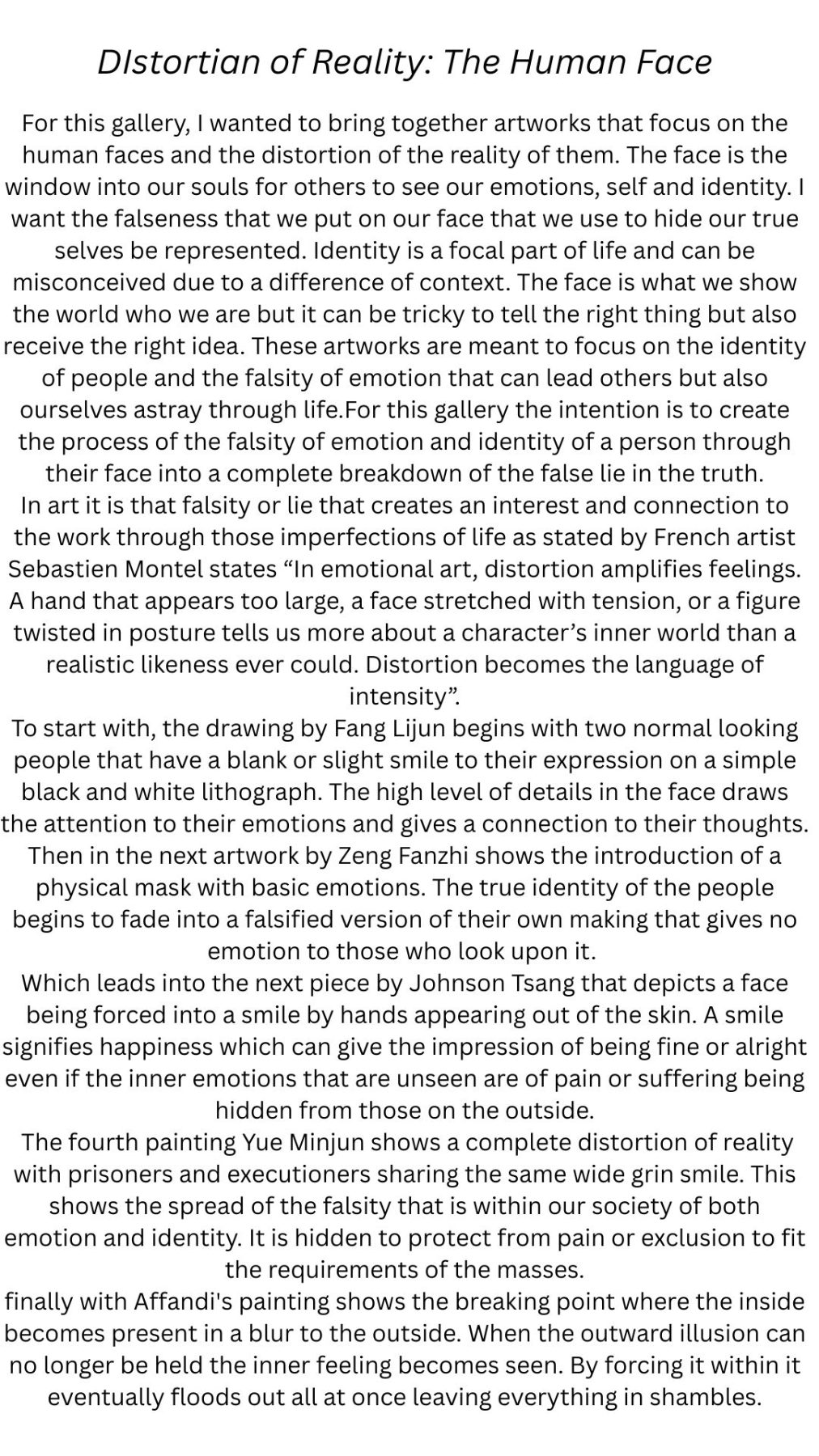
- Copy of TEMPLATE ARTH124 (2026) — For this gallery, I wanted to bring together artworks that focus on the human faces and the distortion of the reality of them. The face is the window into our souls for others to see our emotions, self and identity. I want the falseness that we put on our face that we use to hide our true selves be represented. Identity is a focal part of life and can be misconceived due to a difference of context. The face is what we show the world who we are but it can be tricky to tell the right thing but also receive the right idea. These artworks are meant to focus on the identity of people and the falsity of emotion that can lead others but also ourselves astray through life.For this gallery the intention is to create the process of the falsity of emotion and identity of a person through their face into a complete breakdown of the false lie in the truth. In art it is that falsity or lie that creates an interest and connection to the work through those imperfections of life as stated by French artist Sebastien Montel states “In emotional art, distortion amplifies feelings. A hand that appears too large, a face stretched with tension, or a figure twisted in posture tells us more about a character’s inner world than a realistic likeness ever could. Distortion becomes the language of intensity”. To start with, the drawing by Fang Lijun begins with two normal looking people that have a blank or slight smile to their expression on a simple black and white lithograph. The high level of details in the face draws the attention to their emotions and gives a connection to their thoughts. Then in the next artwork by Zeng Fanzhi shows the introduction of a physical mask with basic emotions. The true identity of the people begins to fade into a falsified version of their own making that gives no emotion to those who look upon it. Which leads into the next piece by Johnson Tsang that depicts a face being forced into a smile by hands appearing out of the skin. A smile signifies happiness which can give the impression of being fine or alright even if the inner emotions that are unseen are of pain or suffering being hidden from those on the outside. The fourth painting Yue Minjun shows a complete distortion of reality with prisoners and executioners sharing the same wide grin smile. This shows the spread of the falsity that is within our society of both emotion and identity. It is hidden to protect from pain or exclusion to fit the requirements of the masses. finally with Affandi's painting shows the breaking point where the inside becomes present in a blur to the outside. When the outward illusion can no longer be held the inner feeling becomes seen. By forcing it within it eventually floods out all at once leaving everything in shambles.
- Series 1, No. 5, 2009, Fang Lijun, lithograph in colours, on wove paper, 47.5 x 58.8 cm. (2026) — Fang Lijun creates a painting that shows duality of the past and presences. Having a lithograph as the median creates a simplicity that applies to a simpler oblivious past while having sharp details and atomically accurate proportions relate to a more modern era. The darkness on the face of the man in front can be taken as the careless part of the past while the man in the back has light on the front of his face having the enlightenment of the modern day but still the darkness to the other half of their head having the same equality on the heads of both men.
- Untitled from the Mask series, 1999, Zeng Fanzhi, colour pencil and crayon on paper, colour pencil and crayon on paper, 16.5 x 14 cm. (2026) — For Zeng Fanzhi he felt that his existential crisis didn’t fit into a contemporary urban life and had to hide what would be his true self. By using a mix of crayons and colored pencils the artwork is able to create a difference between textures and colors that blend seamlessly. The smoothness of the masks highlight the main idea of falsity Fanzhi felt and the illusion of belonging. His use of expressionism highlights his feeling of the distortion that he feels from his life and the reality of it all.
- A touch of smile, Lucid Dream Series, Johnson Tsang, Porcelain, L23 W18 H10cm (2026) — By choosing clay as the median it requires a finer eye to get the right details for the face and hands without showing or creating imperfections in the work. While the face is prominent it is the hands that take the attention with them shaping the face and being the size of a child, possibly their inner child trying to create happiness for themselves. The dreaminess of it being something that could only appear out of one’s dream that creates a realistic emotion on the face of someone without them even knowing.
- The Execution (1995), Yue Minjun, Oil on canvas, 150 cm × 300[1] cm (2026) — In this painting we witness an abnormal execution scene that shows figures aiming without guns at four men standing mostly naked with wide smiles on their face that create a disconnection between the events and emotions of the work. This artwork is a statement of the artist and of society. It represents the artist through the use of his face on every person representing seeing a piece of himself in others. It also shows how society will execute others even though they share the same emotions on the inside and exert a different emotion to the outside world.
- Self Portrait 自畫像, 1970, Affandi, Oil on canvas, 105 x 91 cm. (2026) — Affandi’s self portrait moves away from a traditional style portrait to something that sacrifices beauty and coloration for symbolism and expression. This piece takes the harshities of life at their face value and creates a piece of unique beauty. While it doesn’t match the standard idea of beauty it does create its own style of beauty through the imperfections of the piece and the smudging of colors. The gross imperfections of the face and dark redness exhibit the unique style of Affandi and how he makes it appear lively to the human emotion.
Copy of TEMPLATE ARTH124
2026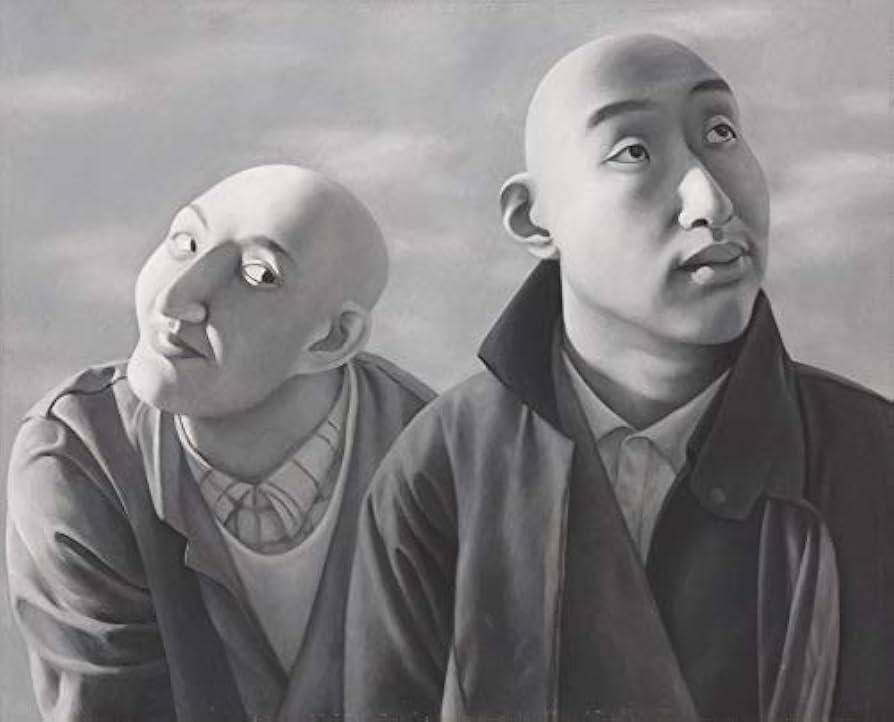
Series 1, No. 5, 2009, Fang Lijun, lithograph in colours, on wove paper, 47.5 x 58.8 cm.
2026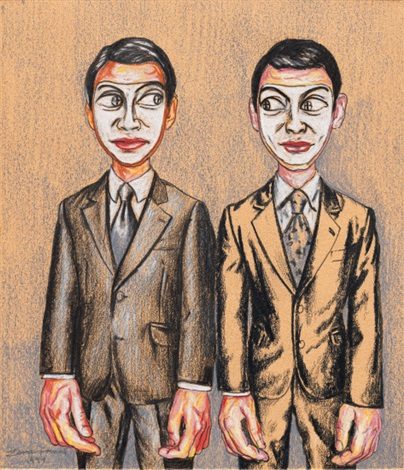
A touch of smile, Lucid Dream Series, Johnson Tsang, Porcelain, L23 W18 H10cm
2026![The Execution (1995), Yue Minjun, Oil on canvas, 150 cm × 300[1] cm](https://media.galerra.art/pbc_1321337024/mr3ipuik5lsse6q/blob_54a3y3nfjg_kb0i87k3ab.jpg)
The Execution (1995), Yue Minjun, Oil on canvas, 150 cm × 300[1] cm
2026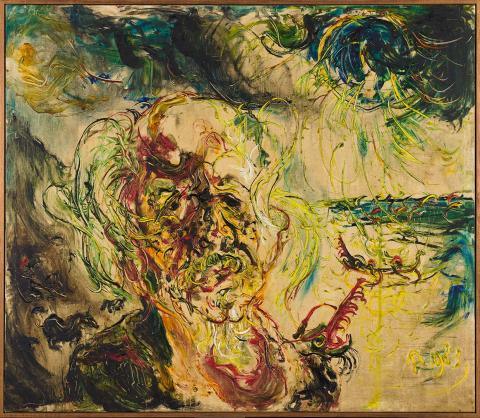
Self Portrait 自畫像, 1970, Affandi, Oil on canvas, 105 x 91 cm.
2026Immersive Experience
Walk through this gallery in 3D
Step inside a virtual gallery space. Walk up to each artwork. See them as they were meant to be seen.
React to this gallery
Guestbook
Sign in to leave a comment.
Loading…