

KO - Laughing at The Edge
Artworks
- Ground 0 (2026) — Laughing At The Edge: Irony, Masks, and Political Anxiety This exhibition explores how artists use exaggerated expressions, cartoon-like imagery, and simplified forms to confront political violence, oppression, trauma, and social control. Stretching from multiple parts of the globe, and different time periods, this exhibit transitions from hysterical laughter to blank smiles and faces and grotesque caricatures. These five works show how different generations and societies have all masked trauma, anxiety, and complicity behind forced grins and pop visuals. All of these pieces decided not to depict power on the nose or realistic, they decided to turn it into something absurd, repetitive, or darkly humorous. The exhibition grants the question: when speaking plainly isn’t safe or possible, how else can we fight for our opinions? Together, these pieces all suggest that under pressure, the truest reaction to power can be irony, exaggeration, or a smile that is forced. Critics of Chinese Cynical Realism claim that its repeated, stylized faces and exaggerated expressions all reflect “collective psychological numbness” after political trauma, where laughter or blankness act as a veil or coping mechanism when direct criticism isn’t possible. This same strategy is used in George Grosz’s Grotesque Weimar elites, Philip Guston’s cartoon Klansmen, and Banksy’s smiley-faced riot cop, all of which use caricature and cartoon themes to reveal the space between how power presents itself and how it actually is. Takashi Murakami’s 69 Arhats Beneath the Bodhi Tree extends these strategies into a pop-Buddhist, post-disaster world, flattening spiritual figures, trauma, and cartoon imagery into one extreme surface. Across all of the works in this exhibit simplified and cartoonish or comic forms become a way to display and express fear, violence, and survival. I chose these works because they all stand the test of time and are still applicable today. These works stretch across the globe and through different generations. They all use bold, simplified imagery, repeated faces, flat colors, and cartoonish forms. The artists used these design choices to talk about how people and societies deal with political pressure and catastrophe. I started with the two Chinese Cynical Realist paintings (Yue Minjun and Fang Lijun), which show individuals laughing and yawning their way through censorship and disappointment. Then, moving to George Grosz’s Weimar caricatures and Philip Guston’s cartoon Klansmen, exposing the ugliness and banality of power in Germany and the United States. Transitioning to Banksy’s smiley-faced riot cop brings this language to modernized contemporary street culture and art, showing how state violence often attempts to be dullified. Finally, Takashi Murakami’s 69 Arhats Beneath the Bodhi Tree evolves the theme to post-disaster Japan, where hundreds of spiritual figures travel across a flat landscape. Combining religious imagery with pop style to cope with trauma. These works all together trace a difficult path from individual psychological responses to a collective and cultural way of masking, processing, and resisting power generationally.
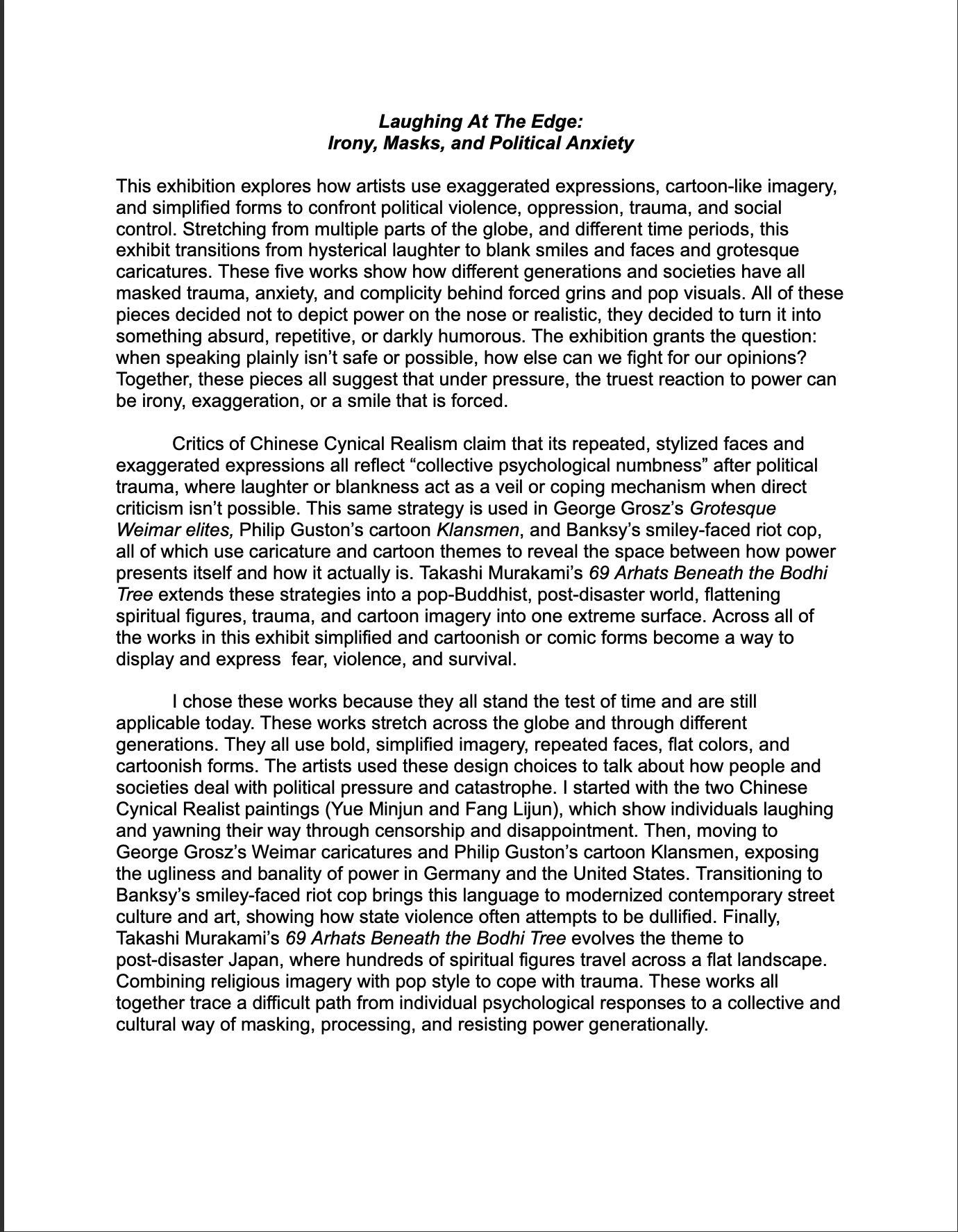
- Yue Minjun - Execution (1995) oil on canvas 150 by 300cm. 59 by 118in. (1995) — The Execution is so unsettling due to the gap between what we see and what we feel. When looking at this piece it gives a very unsettling feeling. Visually, it's almost funny, the bright colors, odd grins, and cartoonish repetition. But the repetition also feels like a glitch, something isn’t right. After learning the context, the laughter stops being funny or odd, it starts feeling like a scream that got stopped or stuck. The flatness strengthens this; there’s no depth, no individuality, just the same face over and over, mimicking how authoritarian systems flatten citizens into interchangeable units. Minjun brilliantly uses irony and exaggeration by showing everyone laughing, the victims and the executioners, insinuating that in certain political climates, everyone is complicit or powerless, and the only “safe” emotional response was this fake, hysterical grin. This painting shows one way to talk and show something that couldn’t be said or shown out loud.
- Fang Lijun Series II, No. 2 (1992), oil on canvas 200 x 230 cm (1992) — Series II, No. 2 fits the exhibition well because it shows a different approach to standing up to political issues. Fang portrayed a quieter, more ambiguous version of the same emotional territory as Yue Minjun’s The Execution. Both artists use a simple, repeated bald headed figure to stand in for an entire generation who feels stuck after Tiananmen, however Fang’s piece is more about the in-between feeling, tired, overwhelmed, and unsure if your voice will matter. The flat style sky/water keep everything calm on the surface, which accentuates the open mouth and makes it more intense. It’s as if Fang froze the moment where your body decides whether to scream, laugh it off, or just sink. This uncertainty falls in line directly with the overall theme of the Exhibition, how do you respond when you aren’t able to speak directly about power or trauma?
- George Grosz - Pillars of Society (1926) oil on canvas. 200,0 x 108,0 cm (1926) — The painting is brutally direct. At a time in history when the severity of the situation was brutal, and direct. There is no way to look at the men in the painting and see them as “respectable”. The chaos and stylistic choices of the men make the painting hard to look at, but that’s the point: you’re not supposed to be comfortable with these people. This piece uses the same strategy of exaggeration and cartoon energy to tear down powerful figures and fight against a political and horrific agenda and time. It fits the exhibition because Grosz was able to show how power masks violence behind fake respectability. Instead of painting these men as realistic portraits, he flattens them into symbolic, almost comic characters, making their hypocrisy easier to see and harder to ignore. Grosz was one of the earliest examples of how artists turn political trauma and social control into dark humor and visual irony when speaking openly was dangerous or useless.
- Philip Guston - Tour (c. 1970) Oil on Canvas 106.7 x 121.9 cm (42 x 48 in.) (1970) — Philip Guston's 'Tour' turns the Klan into a dark cartoon, which is part of why it hits so hard. The flat pink and red palette, chunky outlines, and simplified hooded figures makes the scene look like a bad comic strip instead of a grand history painting, but that flatness is exactly what makes the violence feel so casual and everyday. It looks as if they're just chilling on a roadtrip instead of representing the terror and murder that they caused. Lining up perfectly with the overall theme of the exhibit, using caricature and cartoon language to expose the power hiding behind "normal" routines. The repeated hoods and faceless eyes are inspired by Chinese Cynical Realism's numb, copy-paste expressions, but here the repetition feels like institutional evil; racism as something baked into history rather than one "bad guy". Guston utilized irony and simplified forms instead of realism to talk about trauma and complicity, forcing the viewer to sit with how horror can look boring, and even stupid, when it's normalized.
- Banksy - Flying Copper (2013) Paint on Cardboard (100 x 70cm) (2013) — Banksy's 'Flying Copper' twists a common image of a police officer into something more unsettling, which is why it works so well. The figure is depicted in a full-on riot gear; helmet, body armor, gun, handcuffs; but instead of a serious face, Banksy replaced it with a bright yellow smiley face, and small angel wings on his back. The combination of a happy face and full riot gear insinuates sarcasm, as if Banksy is asking the viewer how safe we feel being surrounded by this much power. The stencil style keeps the details sharp yet graphic, so the image hits the viewer fast, somewhat like an advertisement, except this ad is selling doubt to the public about authority. This piece first appeared on a large cardboard canvas and was hung for the public to see at his Turf War show in the early 2000s in London, at this time police powers and protest crackdowns were huge topics, tying this piece to even more real-world politics, and not just edgy graffiti. Flying Copper feels like a visual joke that stops being funny the longer you look at it, pushing us to question how easily something dangerous can be dressed up as harmless, or even heroic.
- Takashi Murakami 69 Arhats beneath the Bodhi Tree (2013) gold leaf, and platinum leaf on canvas mounted on board; 10 panels, overall: 118 1/8 x 393 ¾ in. (300 x 1,000 cm) (2013) — At first glance, this piece looks as if it might not fit in with the exhibition, but that's exactly the point. Takashi Murakami's '69 Arhats Beneath the Bodhi Tree' is a chaotic, spiritual overload in the best way. He utilizes a wall-style format with endless rows of arhats that immediately hit the viewer with a sense of crowd, but looking closer, each figure is unique and has a cartoon-ish exaggerated body and facial features that create a sense of identity and life. The bright colors, thick black outlines, and repeated patterns pull inspiration from anime and pop-culture aesthetics. Murakami created this piece after the 2011 Tōhoku earthquake and tsunami, making this feel more like a memorial or prayer for protection based on the frantic energy and packed composition. The arhats crowd around the Bodhi tree as a spiritual support system, and Murakami mixes sacred imagery with pop style to show how old religious stories still matter in our messed-up, modern world. It is a great visual piece to end off this gallery because it balances intensity with a visual outlet, it is fun to look at, but the scale and emotional chaos make the viewer sit with ideas of suffering, survival, and community.
Ground 0
2026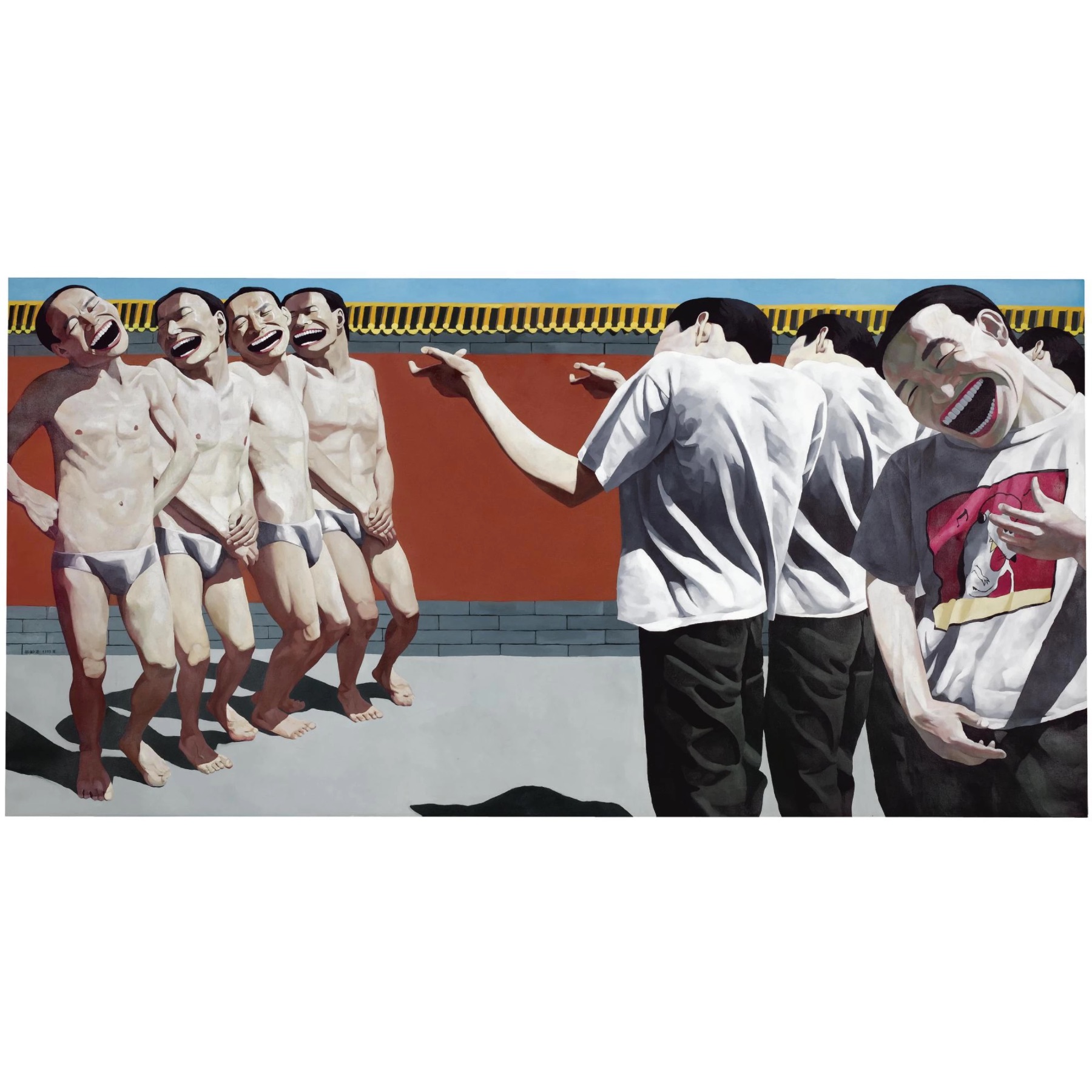
Yue Minjun - Execution (1995) oil on canvas 150 by 300cm. 59 by 118in.
1995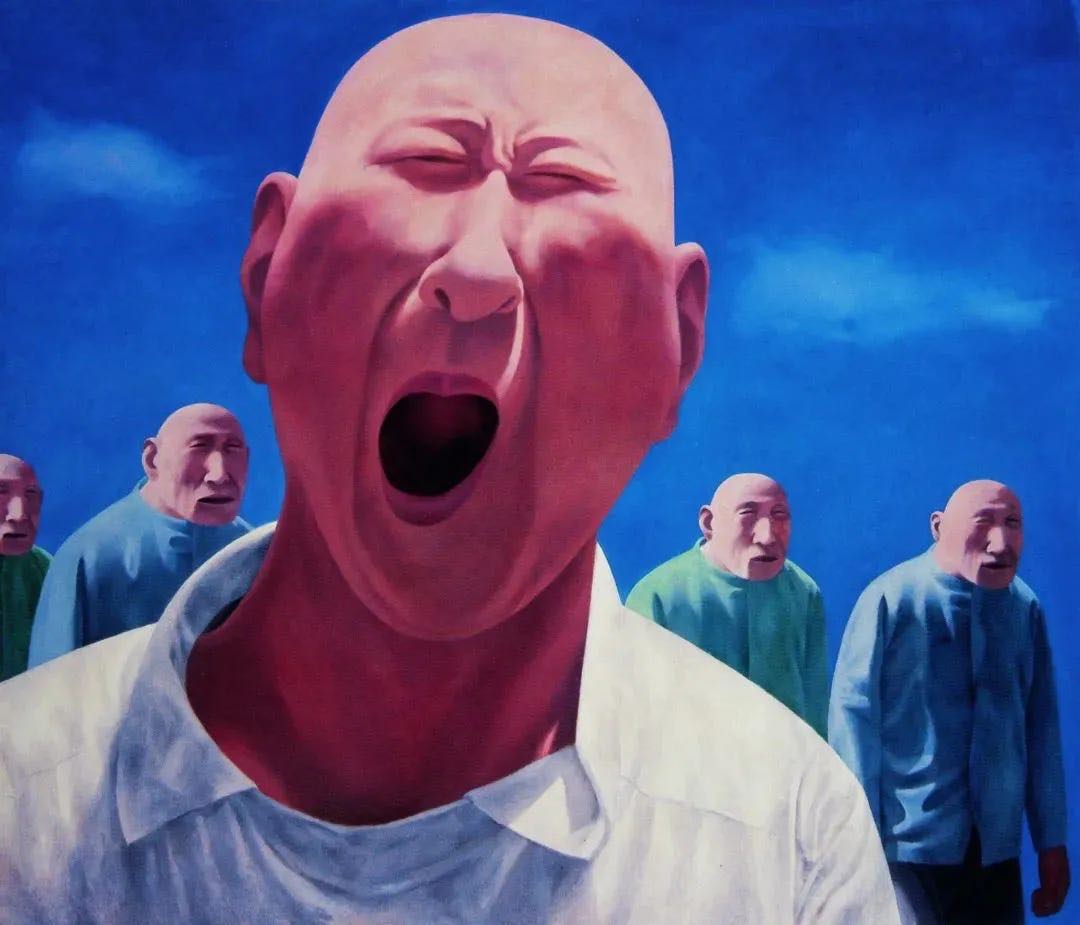
Fang Lijun Series II, No. 2 (1992), oil on canvas 200 x 230 cm
1992
George Grosz - Pillars of Society (1926) oil on canvas. 200,0 x 108,0 cm
1926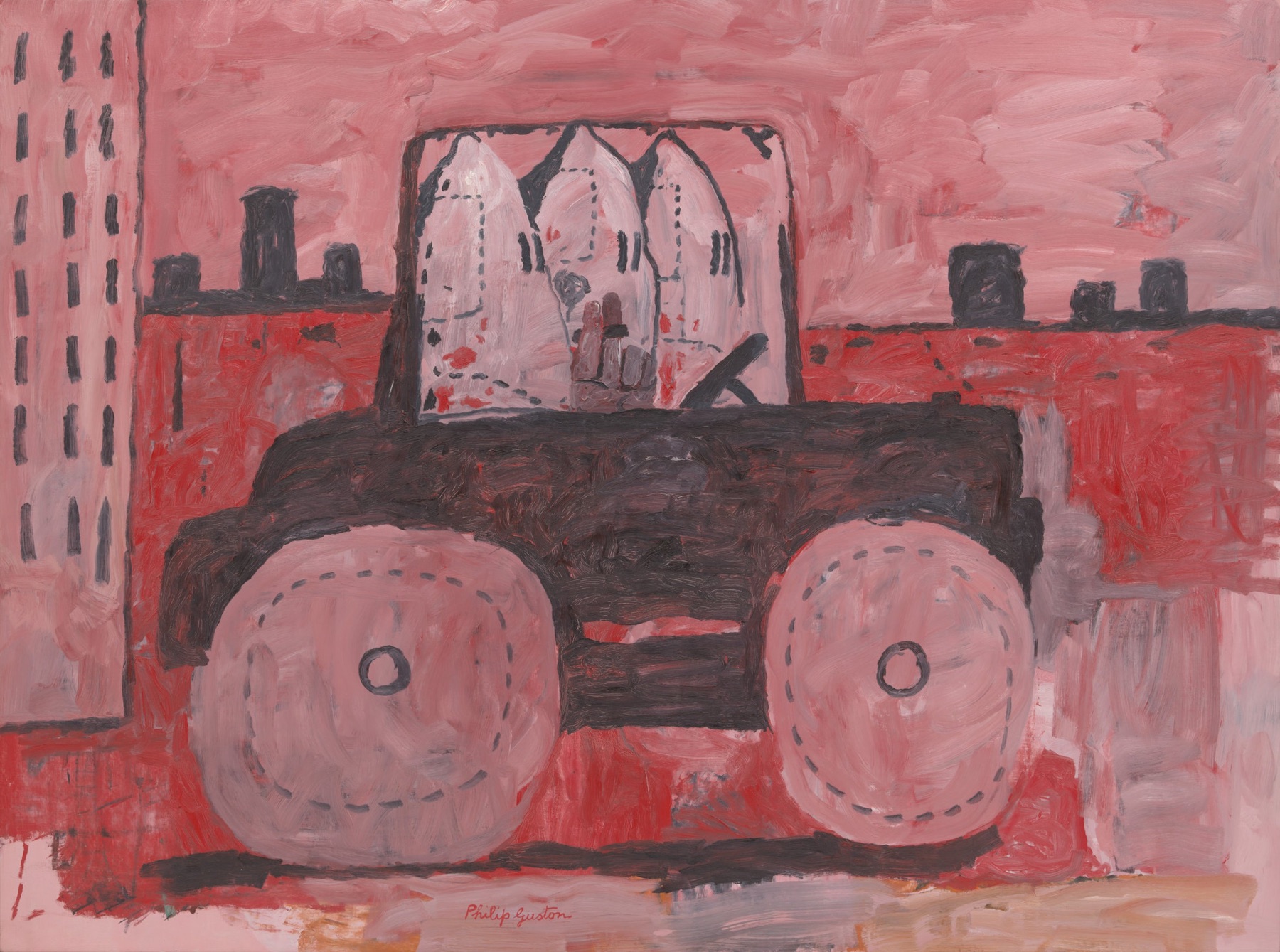
Philip Guston - Tour (c. 1970) Oil on Canvas 106.7 x 121.9 cm (42 x 48 in.)
1970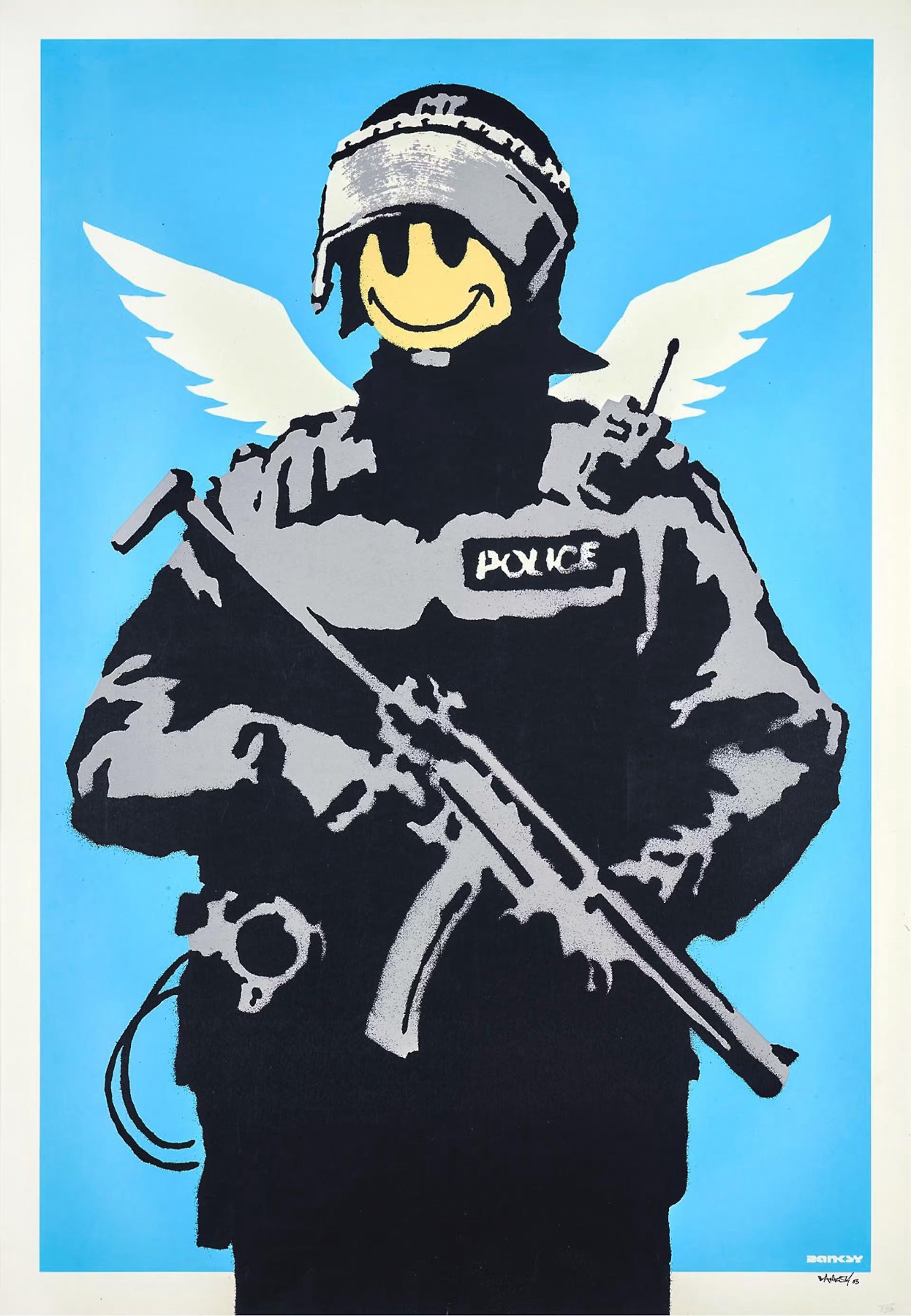
Banksy - Flying Copper (2013) Paint on Cardboard (100 x 70cm)
2013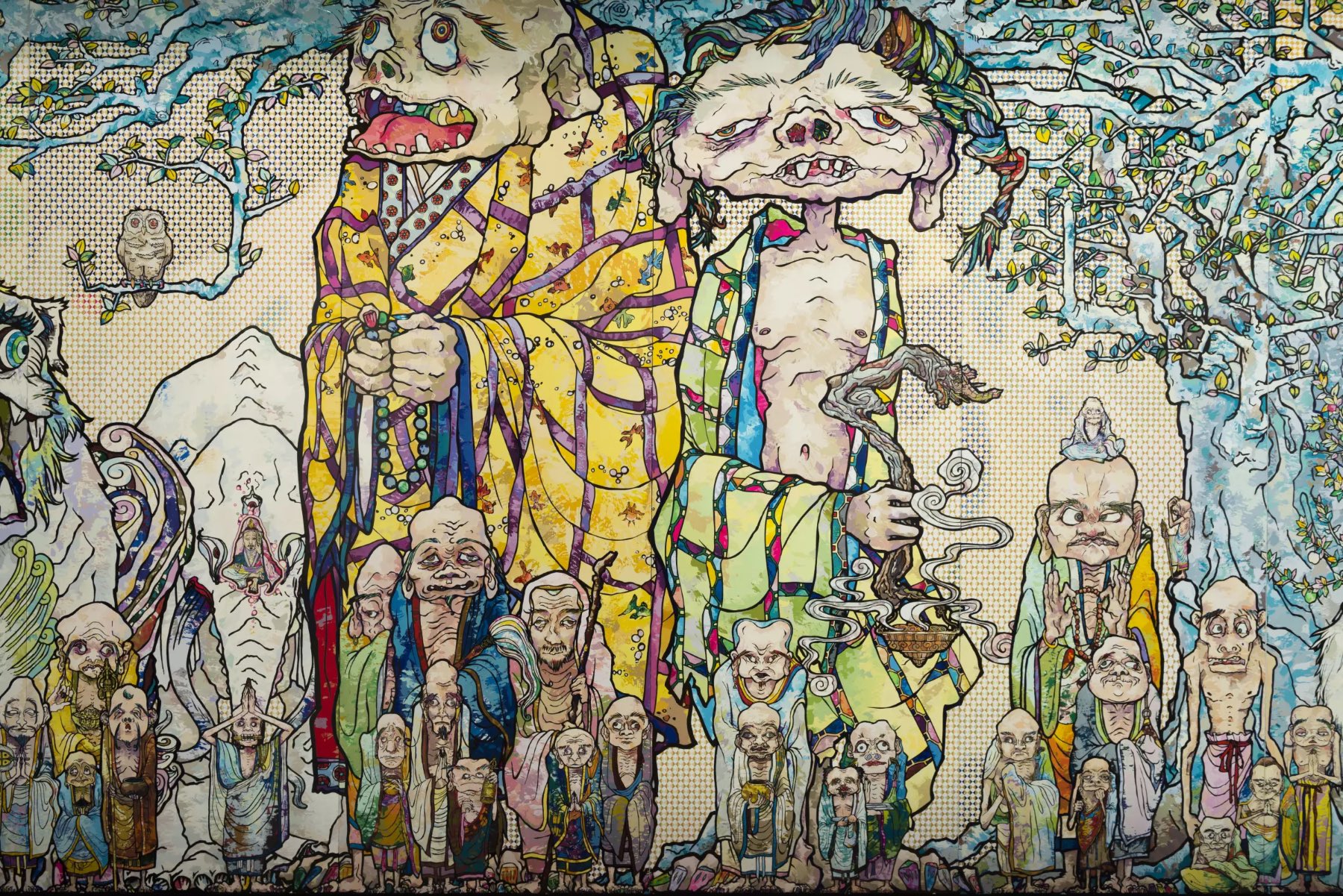
Takashi Murakami 69 Arhats beneath the Bodhi Tree (2013) gold leaf, and platinum leaf on canvas mounted on board; 10 panels, overall: 118 1/8 x 393 ¾ in. (300 x 1,000 cm)
2013Immersive Experience
Walk through this gallery in 3D
Step inside a virtual gallery space. Walk up to each artwork. See them as they were meant to be seen.
React to this gallery
Guestbook
Sign in to leave a comment.
Loading…