image 0 (2026) — This exhibition explores deeply about how early humans were using mark-making through carvings, paintings, and imprinting to shape the environment around them to connect their ideas that were in their minds to their place in the world. I think something to embrace early on is instead of using prehistoric art as just a random collection of mysterious pieces, we can observe them with a concept: how humans gradually used inner thought through symbols. To me, this will transform the whole idea from imagination into identity, meaning, ritual, and community. Looking at Philosopher Ernst Cassirer’s idea that, “There is a conceptual depth as well as a pure visual depth. The first is discovered by science; the second is revealed in art”, can help break down the idea that images arent just seen but are thought too. The key idea is very important when it comes to prehistoric art because whether it is a simple carving, painting on a wall, art on stones, it is early evidence that there is symbolic meaning before written language was a general thing.
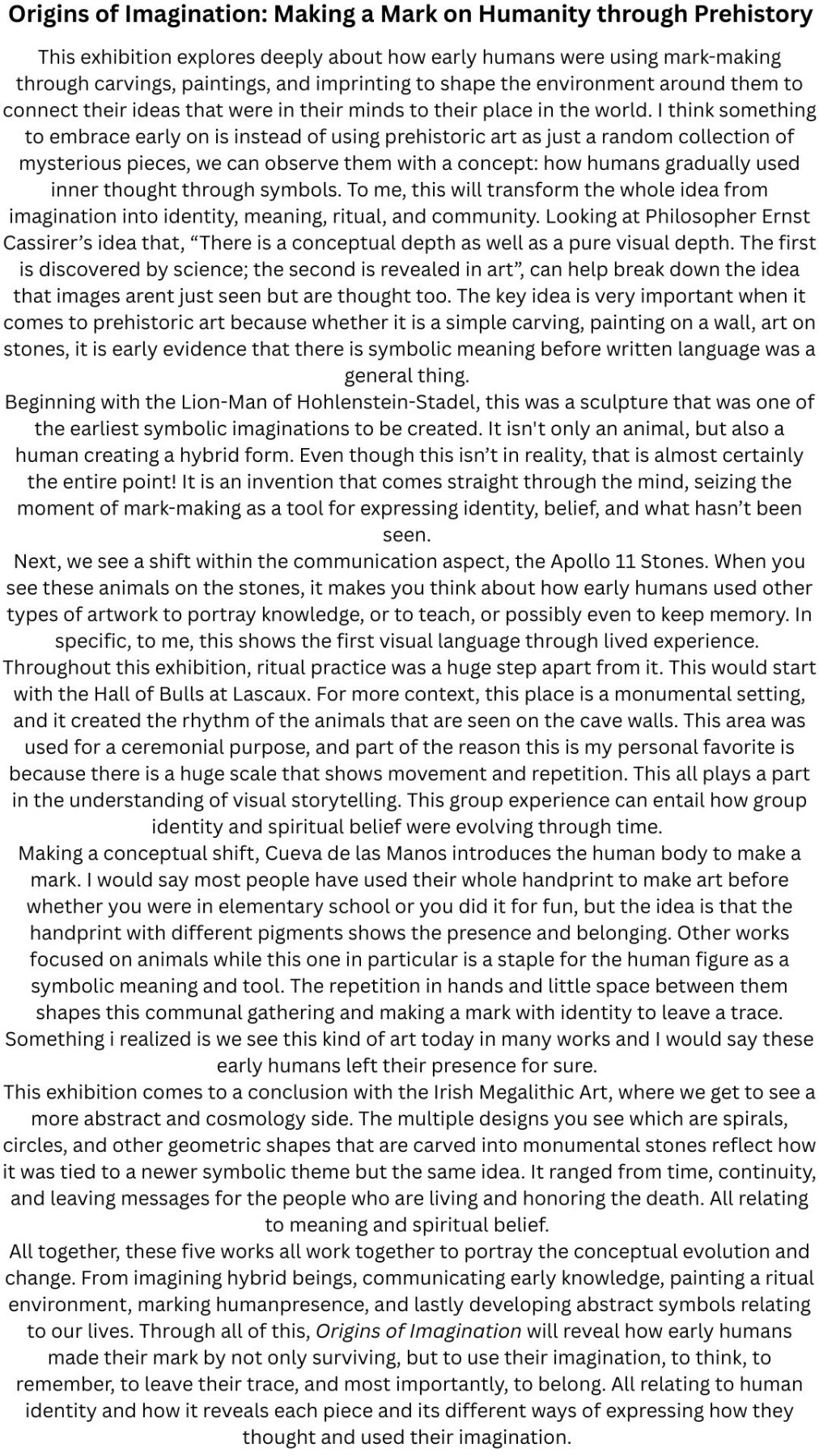
Beginning with the Lion-Man of Hohlenstein-Stadel, this was a sculpture that was one of the earliest symbolic imaginations to be created. It isn't only an animal, but also a human creating a hybrid form. Even though this isn’t in reality, that is almost certainly the entire point! It is an invention that comes straight through the mind, seizing the moment of mark-making as a tool for expressing identity, belief, and what hasn’t been seen.
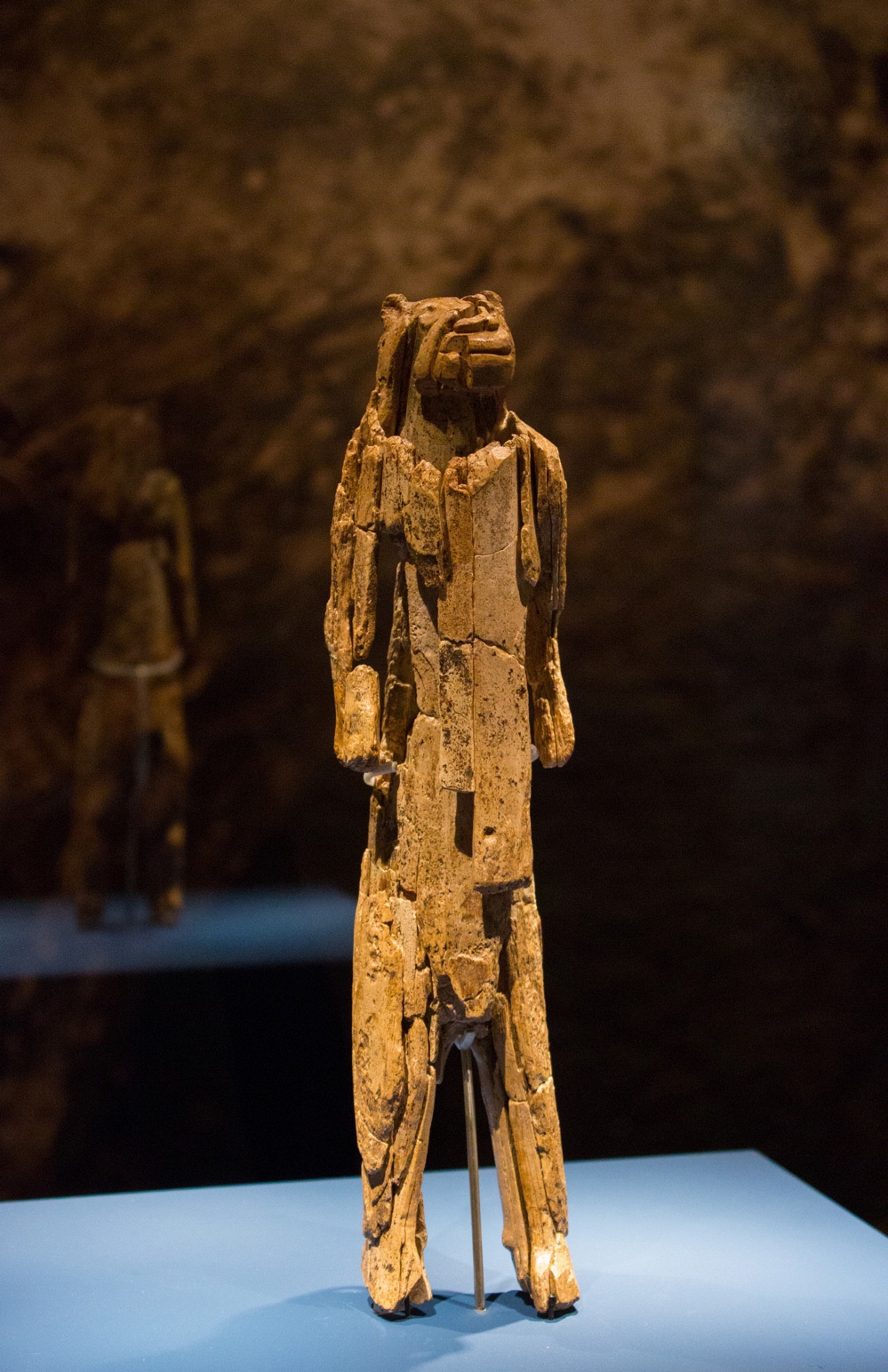
Next, we see a shift within the communication aspect, the Apollo 11 Stones. When you see these animals on the stones, it makes you think about how early humans used other types of artwork to portray knowledge, or to teach, or possibly even to keep memory. In specific, to me, this shows the first visual language through lived experience.
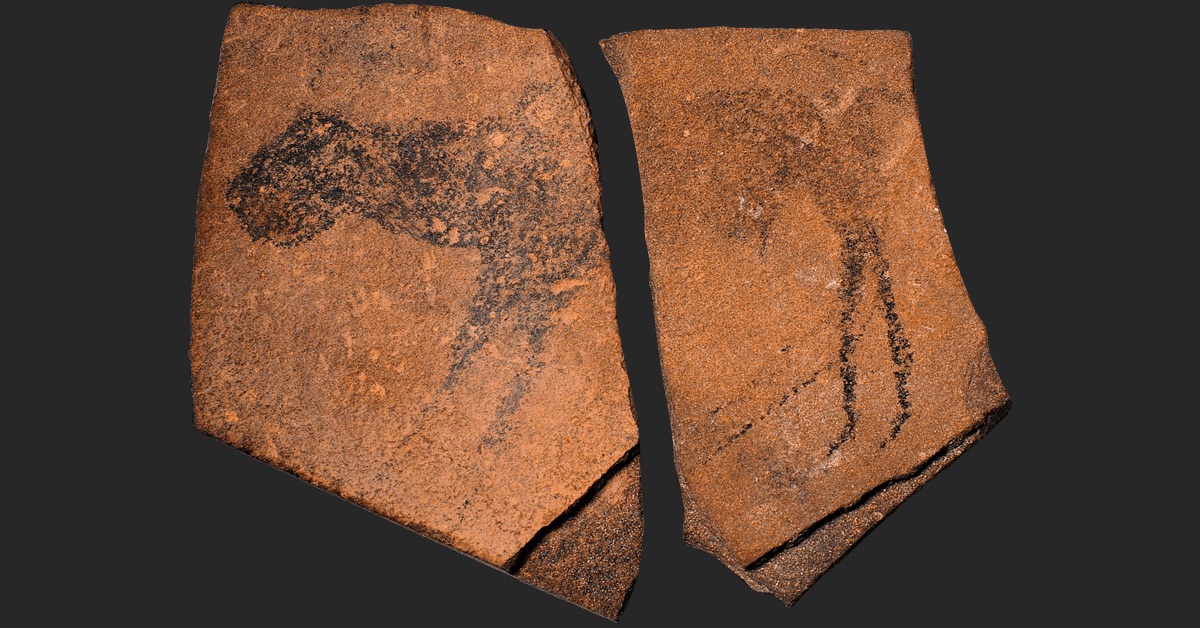
Throughout this exhibition, ritual practice was a huge step apart from it. This would start with the Hall of Bulls at Lascaux. For more context, this place is a monumental setting, and it created the rhythm of the animals that are seen on the cave walls. This area was used for a ceremonial purpose, and part of the reason this is my personal favorite is because there is a huge scale that shows movement and repetition. This all plays a part in the understanding of visual storytelling. This group experience can entail how group identity and spiritual belief were evolving through time.
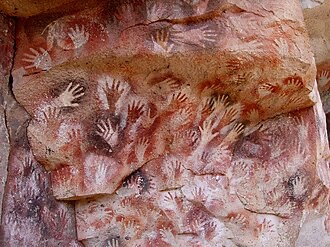
Making a conceptual shift, Cueva de las Manos introduces the human body to make a mark. I would say most people have used their whole handprint to make art before whether you were in elementary school or you did it for fun, but the idea is that the handprint with different pigments shows the presence and belonging. Other works focused on animals while this one in particular is a staple for the human figure as a symbolic meaning and tool. The repetition in hands and little space between them shapes this communal gathering and making a mark with identity to leave a trace. Something i realized is we see this kind of art today in many works and I would say these early humans left their presence for sure.
This exhibition comes to a conclusion with the Irish Megalithic Art, where we get to see a more abstract and cosmology side. The multiple designs you see which are spirals, circles, and other geometric shapes that are carved into monumental stones reflect how it was tied to a newer symbolic theme but the same idea. It ranged from time, continuity, and leaving messages for the people who are living and honoring the death. All relating to meaning and spiritual belief.
All together, these five works all work together to portray the conceptual evolution and change. From imagining hybrid beings, communicating early knowledge, painting a ritual environment, marking human presence, and lastly developing abstract symbols relating to our lives. Through all of this, Origins of Imagination will reveal how early humans made their mark by not only surviving, but to use their imagination, to think, to remember, to leave their trace, and most importantly, to belong. All relating to human identity and how it reveals each piece and its different ways of expressing how they thought and used their imagination.
Ivory figure with lion head and partly human body standing upright, Stadel Cave, Baden-Württemberg, Germany, 40,000 years old (Museum Ulm) (2026) — The Lion-Man's contrast and rhythmic carvings shape its entire symbolic power and context. This comes from a time where humans were still figuring things out because it was so long ago, and due to that, the lions head emphasizes power, or strength, or even authority. It is a simple yet definitive analyzation to make because a creature associated with dominance and strength would suggest that early humans were projecting qualities they admired or feared onto a hybrid being. This piece easily fits within the theme of mark-making and identity. This is a perfect moment in history where humans were able to express inner thoughts and show symbolic meaning that was created in the mind. It makes your mind think: were early humans trying to understand themselves or possibly other beings around the world?
Charcoal and ochre on stone, Namibia (2026) — This represents that the stones have a role in communicating information about animals and tying it to survival. It was intended that they were easily recognized because of the thin lines and clear contrast used in this image. It adds another layer of meaning in which these weren't fixed images but instead were used so that people could travel with them too! Connecting back to the central theme, this communication can really represent how imaginative beings made their marks that were connecting with traveling, teaching, or simply gaining knowledge. It raises a deep thought, were these tools? Maybe it's used for storytelling? Simply decoration? Possibly all of the above?
Pigment on cave wall, France (2026) — This monumental scale creates the rhythmic arrangement of animals and transforms the cave into a ritual environment. The enormous size of the bulls establishes immediate emphasis, while the overlapping forms and varied pigments create a dynamic sense of motion. Due to the context in which the cave was probably used for ceremonies, there is a lot of visual emphasis on the fact that powerful animals are symbolic importance at this moment. Tying back to the theme, it is important to realize that the mark-making representation is now collective in this next step forward in time. It can make us wonder: were these images served as tools, or for humans to realize they aren't the only forces to be in control?
Pigment on rock wall, Argentina (2026) — The visual repetition in hands beings upon this idea of community presence and turns this rock wall into a collective archive and remembrance of being there. This site was specifically used as a hunter gatherer type of site and was used over generations. This wasn't like any other one we’ve seen. There are multiple hand sizes, different shades, so this can indicate that this is upon multiple generations. When discussing the overall theme upon the mark-making sense, this was marking one's own self and as an expression of a tool. It makes us wonder: were these hands used as decoration? Belonging? Spiritual effects? Or to just simply leave one's trace?
image 0
2026
Ivory figure with lion head and partly human body standing upright, Stadel Cave, Baden-Württemberg, Germany, 40,000 years old (Museum Ulm)
2026
Charcoal and ochre on stone, Namibia
2026
Pigment on cave wall, France
2026
Pigment on rock wall, Argentina
2026
Immersive Experience
Walk through this gallery in 3D
Step inside a virtual gallery space. Walk up to each artwork. See them as they were meant to be seen.