

The Torchlit Gallery
Artworks
- The Torchlit Gallery (2026) — Welcome to The Torchlit Gallery. This exhibition is designed to pull you out of the modern world where we usually see art as a flat finished thing on a screen and back into the mindset of the Upper Paleolithic. My foundational concept for this show is The Architecture of the Void. This theme is built on the idea that prehistoric art wasn't just decoration thrown onto a wall. Instead it was a deep physical partnership with the earth. For the people living tens of thousands of years ago a cave wall wasn't a blank canvas it was a living surface. By working with the shadows, the deep hollows and the natural bumps in the stone these early artists were revealing a world that was already there. To ground this idea I am using a theory from the archaeologist David Lewis-Williams who wrote in The Mind in the Cave that "the cave wall is a membrane through which the spirits of the animals pass." This quote is really the heart of the whole gallery. It explains that prehistoric people didn't see rock as just a cold dead barrier. To them the wall was more like a thin vibrating membrane between our world and a spiritual one. When an artist saw a natural bulge in the ceiling or a jagged edge in the dark they didn't just see a rock they saw a spirit trying to push through from the other side. Throughout the gallery I use five keywords Dimension, Acoustics, Perception, Synthesis, and Surface to show how humans used their senses to find these images in the void. I've ordered the exhibition to move from the big communal spaces of the cave down into the more personal internal world of the individual. We start with The Hall of Bulls which represents the Acoustic Void. I chose this as the opener because it shows how the cave's architecture was used to amplify sound proving that art was a full sensory experience. Next is The Altamira Bison where the surface of the ceiling becomes the main focus. Here the artists used natural bumps in the limestone to create 3D mass showing a total Synthesis between their paint and the stones shape. Moving deeper into the gallery The Spotted Horses of Pech Merle highlight Perception. You can clearly see how a natural rock edge dictated the shape of a horse's snout almost like the artist was just tracing a ghost they found in the wall. Then we have The Sorcerer at Chauvet which moves us into Sculptural Space. By painting on a rock pillar that hangs right in the middle of a room the artist turned the void of the chamber into a 3D monument. We finish the journey with the Lion-Man. Even though this is a portable object the artist still had to navigate the Internal Void which is the hollow nerve cavity of a mammoth tusk to find the figure hidden inside. Ultimately these works show that prehistoric art was about listening and feeling the environment just as much as it was about drawing. These artists didn't just create images out of nowhere they worked with the world to let them out.
- The Hall of Bulls Artist: Unknown (Paleolithic communities) Year: c. 16,000–14,000 BCE Medium: Mineral pigments (ochre and charcoal) on limestone — This place is a perfect example of how early humans understood space in a way that goes way beyond just drawing. They didn't just find a flat wall; they found a "theater." When you look at the scale of these bulls and where they’re placed, it’s clear that the artists were thinking about the whole room. By choosing the loudest, most echoing part of the cave, they turned the "void" of the chamber into a tool to make their art feel more powerful. It shows that even 16,000 years ago, people weren't just making pictures—they were creating immersive environments. They used the cave’s natural architecture to make sure that anyone standing there would feel the thundering hooves in their chest, not just see them with their eyes. It’s a huge achievement because it shows they were planning an experience for an audience, using the dark and the sound to tell a story that felt bigger than real life.
- The Altamira Bison Artist: Unknown (Magdalenian culture) Year: c. 17,000–12,000 BCE Medium: Polychrome pigments (charcoal and ochre) on limestone — I think this shows a lot of perception and respect for the natural world. Most people today would look at a bumpy cave ceiling and see it as a bad place to paint, but these artists saw it as an opportunity. By letting the cave's natural shape do the heavy lifting, the artist created a sense of weight and realism you just can't get on a flat canvas. It’s a perfect partnership between a human hand and a piece of stone. It’s successful because it doesn't try to hide the "void" or the rough parts of the earth; it celebrates them. It proves that prehistoric art wasn't about humans trying to dominate nature, but about them finding their place within it. To see a bison’s muscle in a limestone bulge is a level of artistic "vision" that is honestly just as sophisticated as anything you’d see in a modern museum today.
- The Spotted Horses of Pech Merle Artist: Unknown (Gravettian culture) Year: c. 25,000–24,000 BCE Medium: Mineral pigments on limestone — This piece is a great reminder of how creative the prehistoric mind was when faced with the "emptiness" of a cave. They weren't limited by the "void"; they were inspired by it. Using that jagged rock edge for the horse’s snout wasn't just a shortcut or a lucky accident—it was a way of showing that the world is already full of art if you know how to look for it. To me, this is one of the most successful pieces in the gallery because it’s so simple yet so deep. It shows that our ancestors were looking at the world with an "active eye," searching for connections between their own thoughts and the shapes of the earth. By adding the hand stencils right next to the horse, they’re basically proving that humans and the environment are connected. It’s a powerful judgement on human nature: we have this deep-rooted need to find ourselves in the world around us.
- The Sorcerer (The Pendant) Artist: Unknown (Aurignacian culture) Year: c. 32,000–30,000 BCE Medium: Charcoal on limestone pendant — This is probably the most intentional use of a cave I've ever seen. Instead of just "drawing" on a flat surface, the artist used the actual volume of the room to create what we would call a 3D installation today. Choosing a hanging rock pillar—something that takes up space in the center of the "void"—was a bold move. It shows that even 30,000 years ago, we had an "architectural vision" for how art should live in a space. It’s successful because it forces the viewer to move. You can’t just stand still; you have to interact with the architecture of the cave to see the spirit on the rock. It turns the cave from a storage space into a sacred place. It tells us that prehistoric people were capable of really complex abstract thinking, using the dark and the physical "pendant" to create a sense of mystery that still feels intense today.
- The Lion-Man (Löwenmensch) Artist: Unknown (Aurignacian culture) Year: c. 40,000–35,000 BCE Medium: Carved Mammoth Ivory — The Lion-Man is the perfect ending for the gallery because it proves that even when we move away from the cave walls and hold something in our hands, we’re still working with the "architecture" of the world. The artist had to be incredibly disciplined to carve around the hollow "void" inside that tusk without breaking it. It’s a masterpiece of technical skill, but also of imagination. Spending 400 hours on something that isn't even "real" (a lion-human hybrid) shows that symbols were just as important for survival as food was. It turns a piece of a dead animal into a symbol of hope and myth that has lasted for 40,000 years. It’s the ultimate evidence that being human means looking at a "void", whether it’s a dark cave or a hollow tusk—and choosing to fill it with something meaningful.
The Torchlit Gallery
2026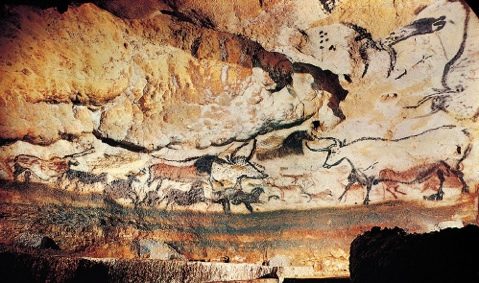
The Hall of Bulls Artist: Unknown (Paleolithic communities) Year: c. 16,000–14,000 BCE Medium: Mineral pigments (ochre and charcoal) on limestone
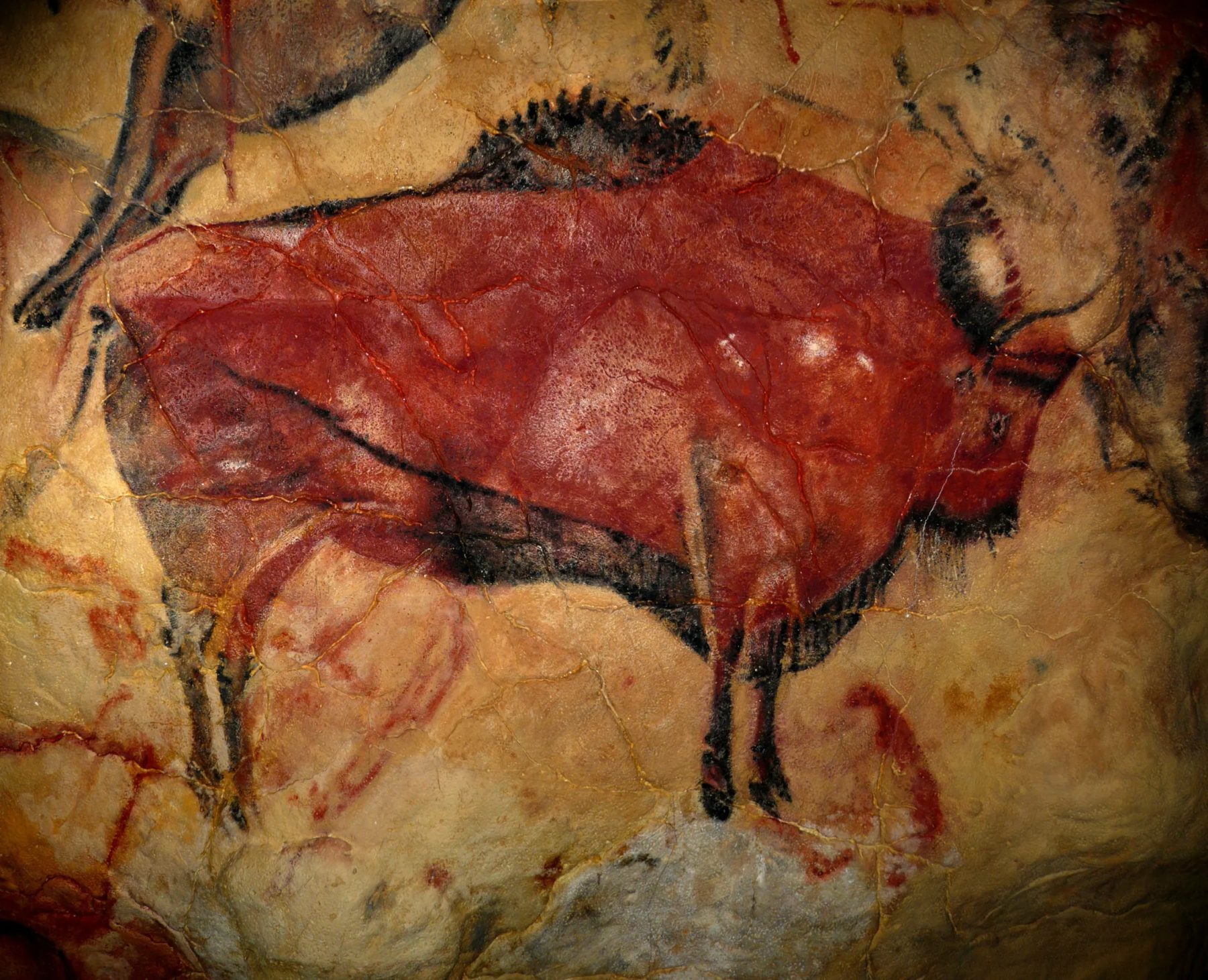
The Altamira Bison Artist: Unknown (Magdalenian culture) Year: c. 17,000–12,000 BCE Medium: Polychrome pigments (charcoal and ochre) on limestone
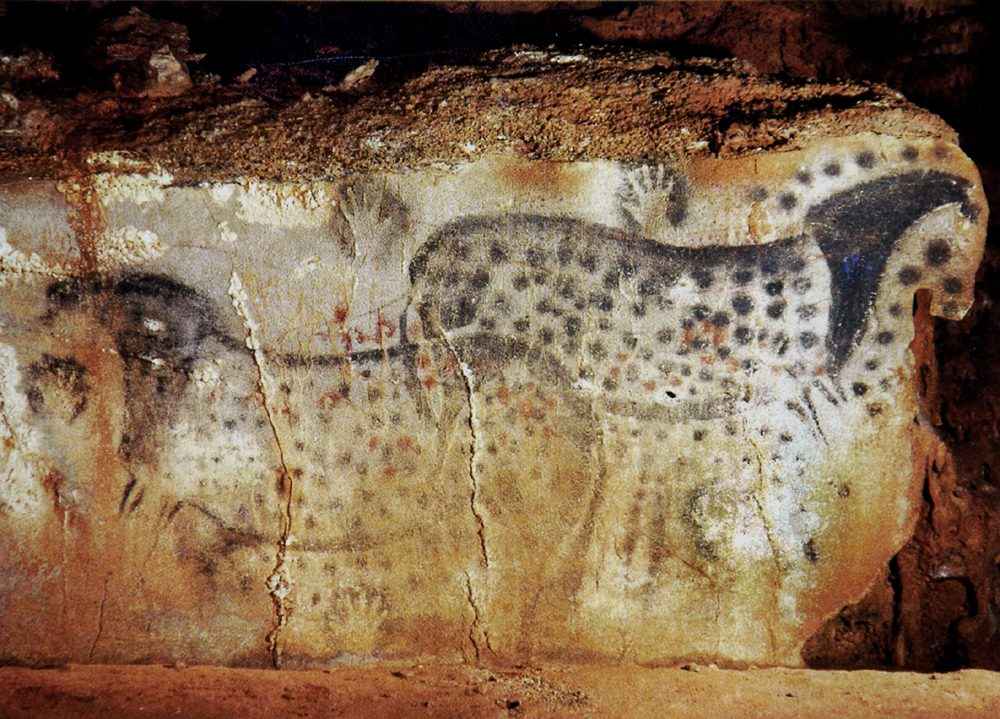
The Spotted Horses of Pech Merle Artist: Unknown (Gravettian culture) Year: c. 25,000–24,000 BCE Medium: Mineral pigments on limestone
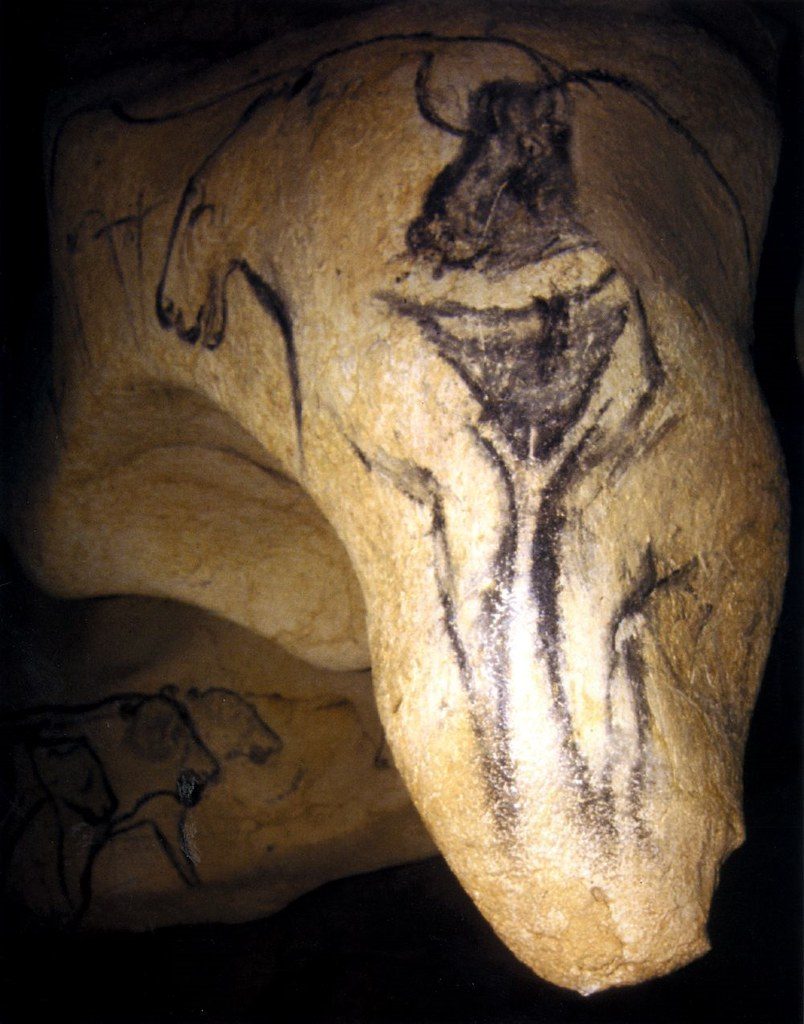
The Sorcerer (The Pendant) Artist: Unknown (Aurignacian culture) Year: c. 32,000–30,000 BCE Medium: Charcoal on limestone pendant
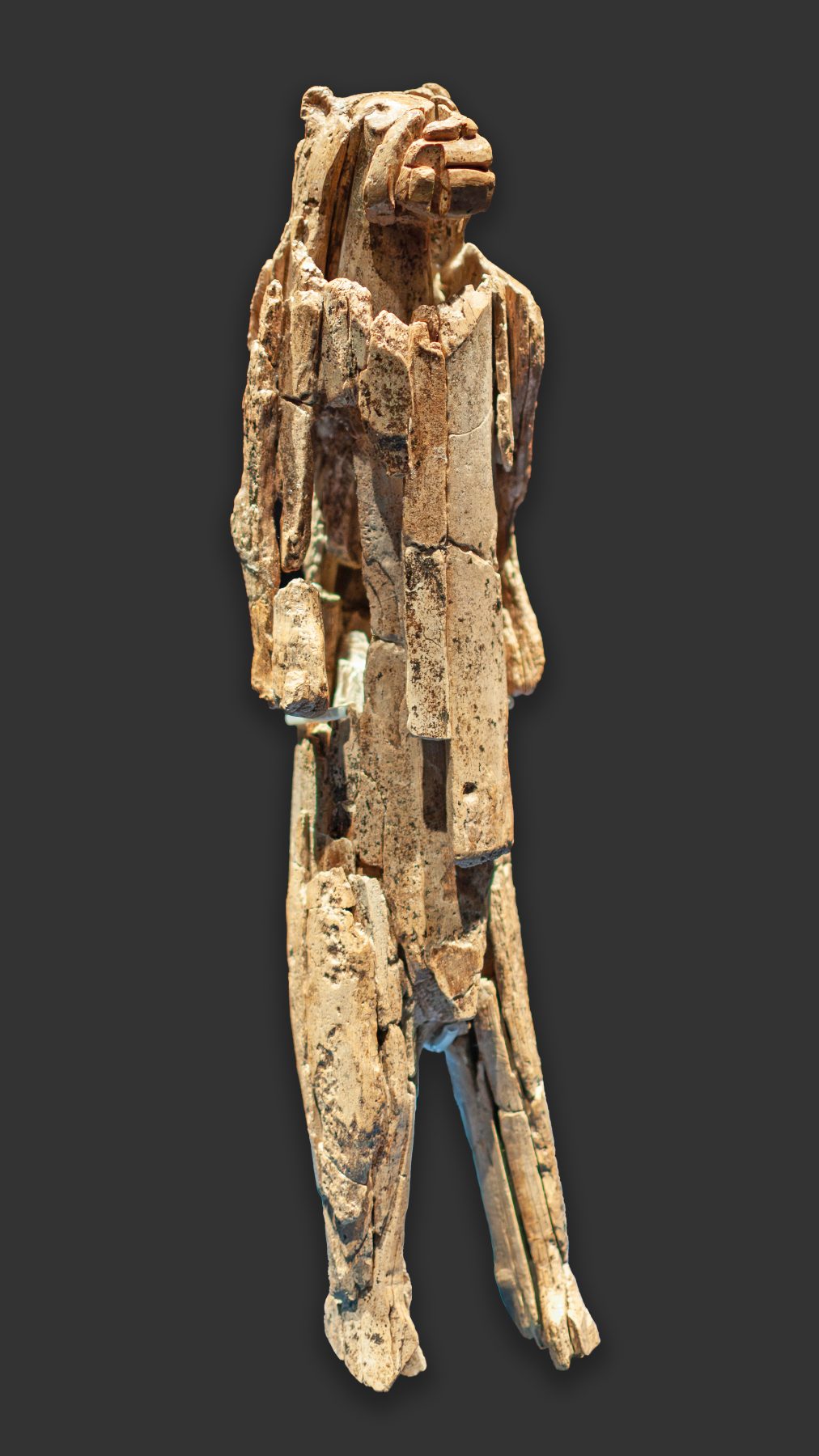
The Lion-Man (Löwenmensch) Artist: Unknown (Aurignacian culture) Year: c. 40,000–35,000 BCE Medium: Carved Mammoth Ivory
Immersive Experience
Walk through this gallery in 3D
Step inside a virtual gallery space. Walk up to each artwork. See them as they were meant to be seen.
React to this gallery
Guestbook
Sign in to leave a comment.
Loading…